Why an inventory matters when renting
Most disputes between landlord and tenant come down to one question: what condition was the flat in at the start? Without a document that settles this, it is one word against another, and the deposit becomes a matter of haggling rather than settlement.
An inventory with photos solves this problem for both sides:
- The landlord is protected against damage and missing items — it provides grounds to deduct the deposit where that is justified.
- The tenant is protected against being charged for faults that existed before move-in — a scratch on the floor or a broken burner is documented from day one.
This is not a formality for the distrustful. It is a document that makes the end-of-tenancy settlement take five minutes rather than end in a row or in court.
Inventory versus handover record
These two terms are often confused, and they serve different roles.
| Document | What it covers | Main purpose |
|---|---|---|
| Inventory | list of items provided to the tenant | what is in the flat |
| Handover record | condition of the flat, meters, contents | what condition it is handed over in |
In practice the inventory is part of the handover record. The record describes the whole — walls, floors, windows, meter readings — while the inventory lists specific items together with their condition. A well-prepared record contains both, plus photos.
What to include, room by room
The simplest way is to go through the flat room by room — then nothing slips through. It is worth including everything that has value or can break.
Kitchen
Fridge, oven, hob, extractor, dishwasher, microwave, kettle. Plus cabinets, worktop, sink and tap, and basic equipment if it is part of the tenancy (crockery, cutlery).
Living room and bedrooms
Sofa, armchairs, table, chairs, bed, mattress, wardrobes, chests of drawers, desk. TV and audio-visual equipment if they belong to the landlord. Lamps, curtain rails, curtains.
Bathroom and utility room
Washing machine, dryer, boiler, fittings, bathroom furniture, mirror. Vacuum cleaner and other household equipment handed to the tenant.
A rule of reason: list what a dispute can realistically arise over — appliances, furniture, items of value. There is no need to count teaspoons one by one, but an expensive coffee machine or a TV — definitely, with the serial number.
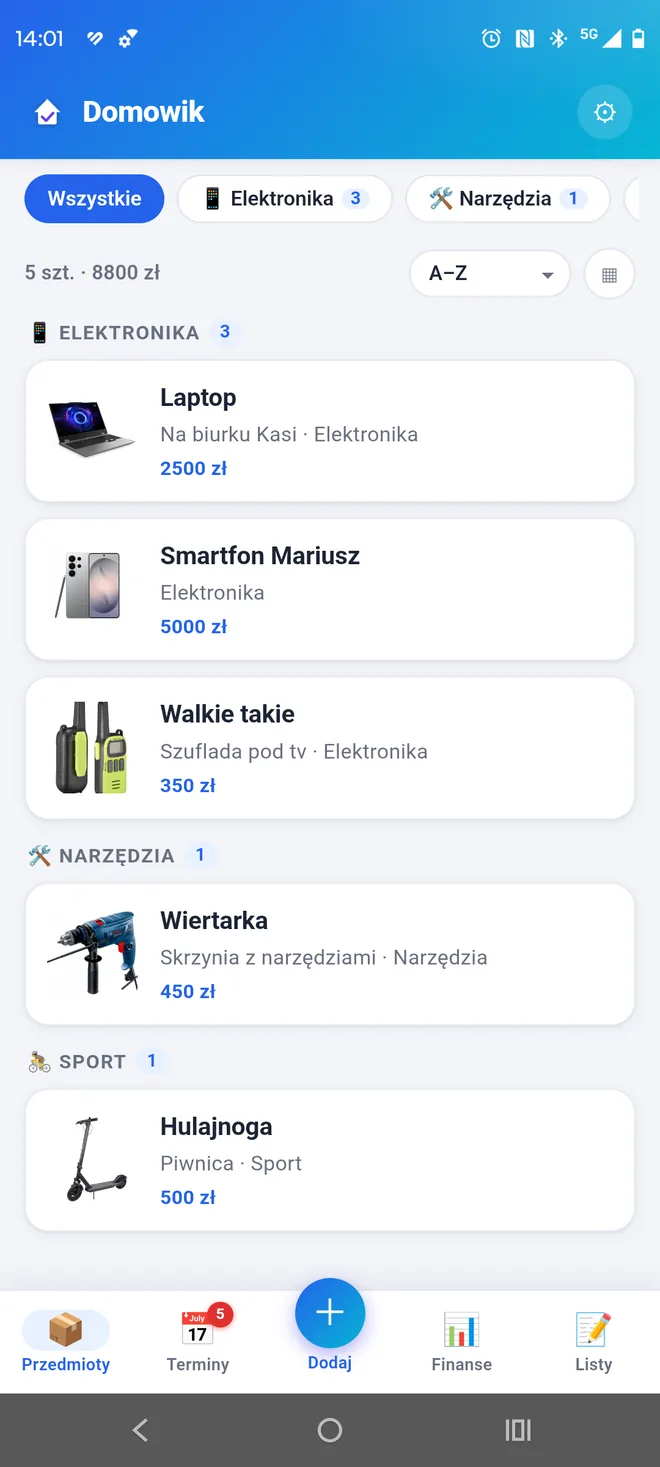
In Domowik you describe each thing with a photo, condition and location — and export the whole thing as a list. See it on Google Play →
Describing condition, not just the thing
The most common mistake is an inventory that lists things but says nothing about their condition. "Sofa" tells you nothing — at move-out no one knows whether the stain was there before. That is why for each valuable item it is worth adding a short note on condition:
- General condition — new, good, signs of use, damaged.
- Specific damage — "5 cm scratch on the worktop by the sink", "enamel chip in the bath".
- Appliance function — whether it works, whether the full set of remotes and accessories is present.
- Serial number for pricier equipment — it identifies the unit unambiguously.
Such a description protects both sides: the landlord has grounds to deduct for real damage, and the tenant has proof that a given fault already existed at the start.
Photos from the day of handover
A written description matters, but a photo is decisive. A dated photograph shows the condition exactly on the day of handover and is not open to interpretation.
What is worth photographing:
- Every pricier appliance and piece of furniture — as a whole and close up where there are signs of use.
- Existing damage — scratches, stains, chips, marks on walls.
- The state of floors and walls in each room.
- Rating plates with serial numbers of pricier equipment.
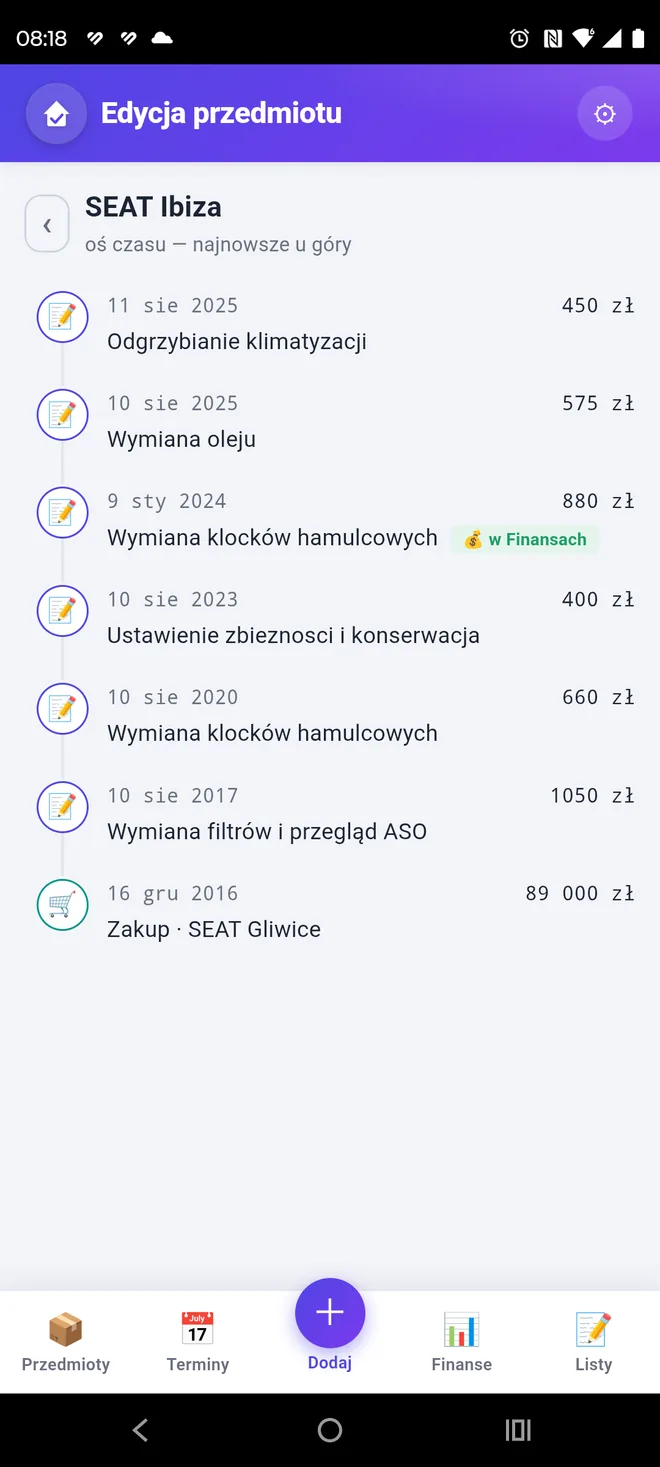
Why it works: at the end of the tenancy you simply compare the "before" and "after" photos. The difference is visible at once and neither side has to prove anything in words. That turns a potential dispute into a simple comparison.
Meters and keys
Besides the contents, the record should cover two things that are easy to forget yet generate disputes:
- Meter readings — electricity, gas, water and possibly heating. Best with a photo of the display on the day of handover. This is the basis for settling utilities.
- Keys and remotes — how many sets of keys, to which locks, remotes for a gate or garage. Missing ones at return are a typical reason for a deduction.
Signature and two copies
A document gains force when both parties sign it and each keeps their own copy. A few rules worth following:
- Date and signatures of both parties on the record and inventory.
- Two copies — one each for tenant and landlord.
- A digital version with photos — as a safeguard for paper, which can be lost.
- Agreement on condition — if either side has reservations, they are written in at once, not after the fact.
Prepare an inventory with photos on your phone
In Domowik you add each thing with a photo, condition, location and serial number, and export the whole thing as a list or PDF report. The data stays on the device.
Get Domowik on Google Play Scan with your phone
End of tenancy and deposit settlement
All the work put into the initial inventory pays off at move-out. A final record is drawn up and the condition compared with the day of handover.
A deposit is deducted only for damage beyond normal wear and tear — a worn carpet after two years is wear, a smashed window is damage. The line can be disputed, but documentation from the day of move-in shifts it from "who is right" to "what the photos show". If the initial inventory had dated photos, the settlement is quick and hard to challenge.
Common mistakes
- A bare list with no condition. "Fridge, sofa, table" says nothing about whether they worked and were undamaged.
- No photos. A written description is weaker in a dispute than a dated photograph.
- The document held by only one side. An inventory the tenant does not have loses credibility in a dispute.
- Skipping the meters. No initial readings is a straightforward dispute over utility bills.
- No serial numbers for pricey equipment. It makes it harder to show the returned unit is the same one.
- Putting the inventory off "for later". Once the keys are handed over, the initial condition is hard to establish.
How Domowik can help
An inventory can be made in a spreadsheet with a separate photo folder — that is enough for some people. The awkward part is the link: the list in one file, the photos in another, and the condition of each thing to remember separately.
In Domowik you save each thing as an item with photos, a note on condition, its location in the flat, brand, model and serial number. Everything is in one place and available offline. You can export the whole list, and for pricier contents prepare a PDF report with photos — a ready attachment to the record. At the end of the tenancy comparing condition comes down to looking at the saved photos.
How to inventory contents efficiently, without cataloguing every trinket, we described in the guide on home inventory step by step. And since the data stays on the device, before changing your phone it is worth making a backup.
Frequently asked questions
What is the difference between an inventory and a handover record?
An inventory is a list of the things the landlord makes available to the tenant — furniture, appliances, kitchen equipment. A handover record is a broader document describing the condition of the flat on the day of handover: meters, the state of walls, floors and, indeed, the contents. The inventory is usually part of the handover record.
Are photos needed if there is already a list?
A list says what is there, but not in what condition. In a deposit dispute condition is what decides — a scratch on the worktop, a stain on the sofa, whether the appliance works. Photos from the day of handover are the strongest evidence, because they carry a date and show exactly how a thing looked at the start.
Who should keep a copy of the inventory — tenant or landlord?
Both. The record and the inventory are signed by both parties, and each keeps their own copy, ideally also in a digital version with photos. A document held by only one side is much weaker in a dispute.
How does an inventory protect the deposit?
A deposit is deducted for damage beyond normal wear and tear. Without a documented initial condition it is hard to tell whether a fault arose during the tenancy or existed before. An inventory with photos from the day of handover sets a reference point for both sides.
What to do at the end of the tenancy?
On move-out a final record is drawn up and the condition compared with the day of move-in. If the initial inventory had photos and dates, the comparison is quick and beyond dispute. The deposit settlement rests on exactly that difference.
Does an inventory have to be on paper?
A document signed by both parties is usually enough; the form can be free as long as both sides accept it. A digital version with photos is more convenient to store and compare at the end of the tenancy, but the signed document remains the basis. It is worth checking the formal requirements for your country.